
“Digibeat has been providing web hosting and related services for Baby Memorial Hospitals for many years. We are highly satisfied with their professionalism, technical expertise, and commitment to delivering reliable services. Their team is responsive, dependable, and always willing to support our requirements promptly. We appreciate their consistent service quality and look forward to our continued association.”

Hospital website development in Kerala and the Gulf
Websites where patients find the right doctor, check OP timings and book a visit, built for multi-specialty hospitals and medical colleges.
A hospital website has one main job: help a patient reach the right doctor quickly.
The chairman’s message, the history and the awards still belong on the site, but patients rarely start there. They search for a doctor, check the timing and call. So we build hospital sites around the doctor directory and the appointment request, then make sure Google can find every department.
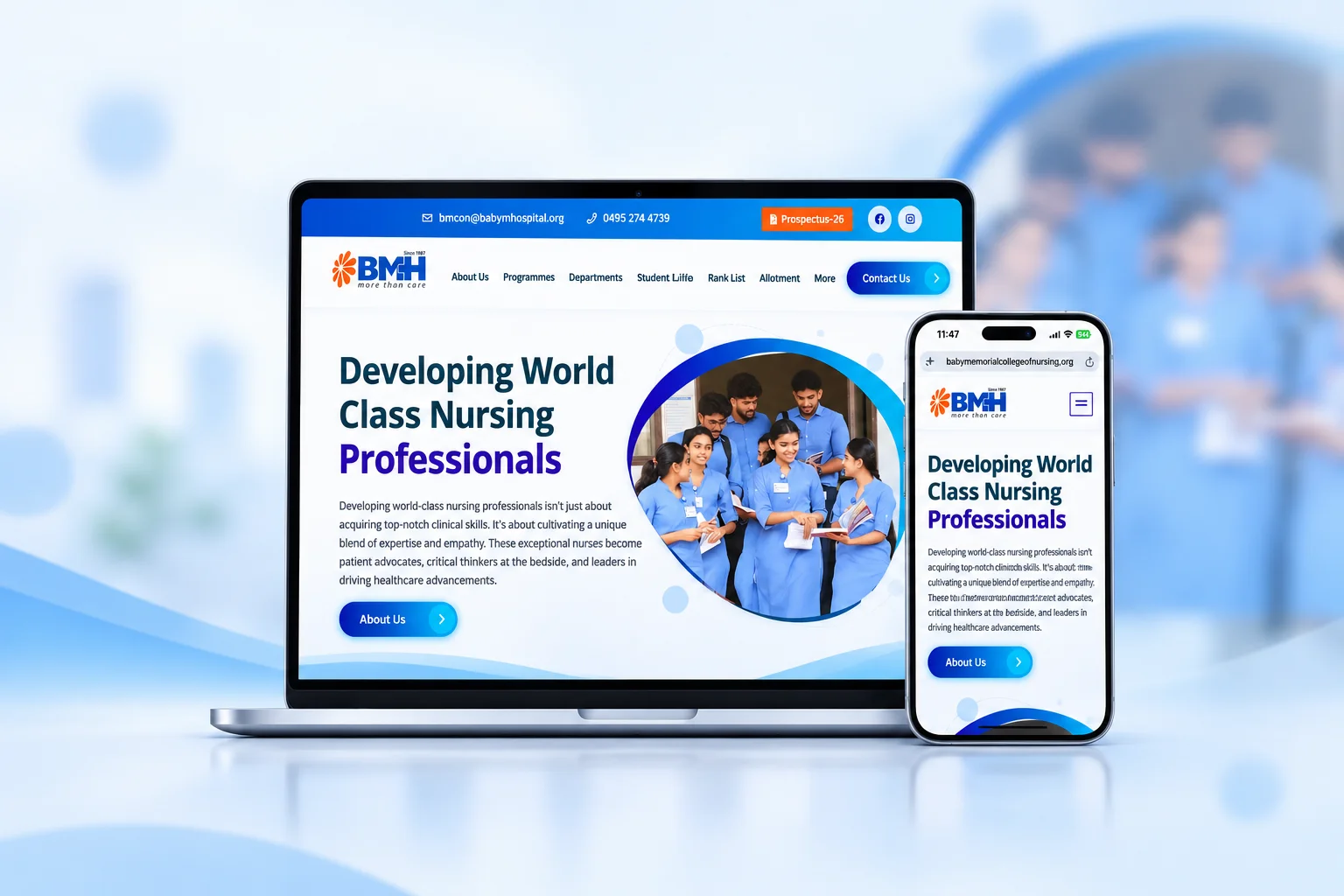
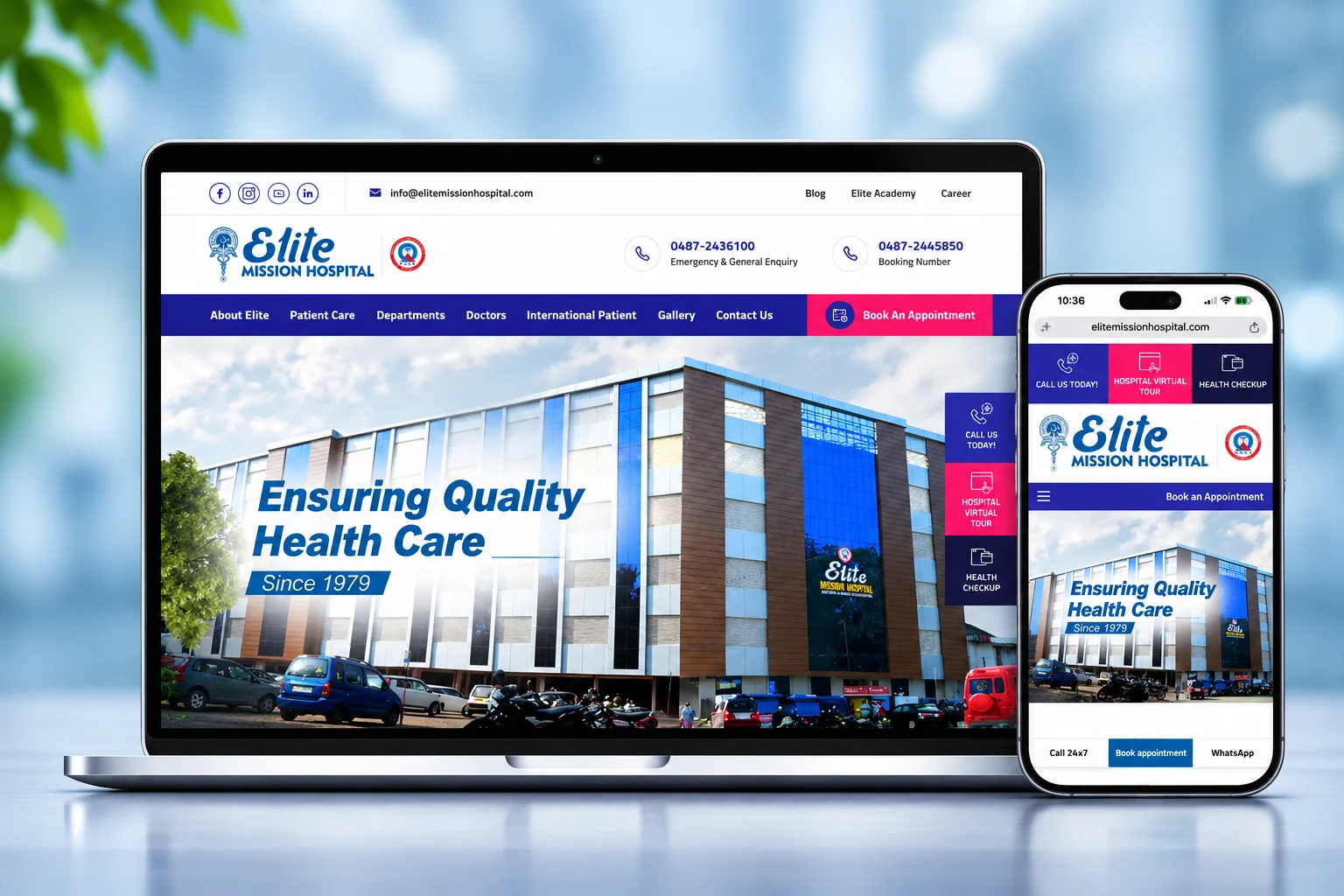
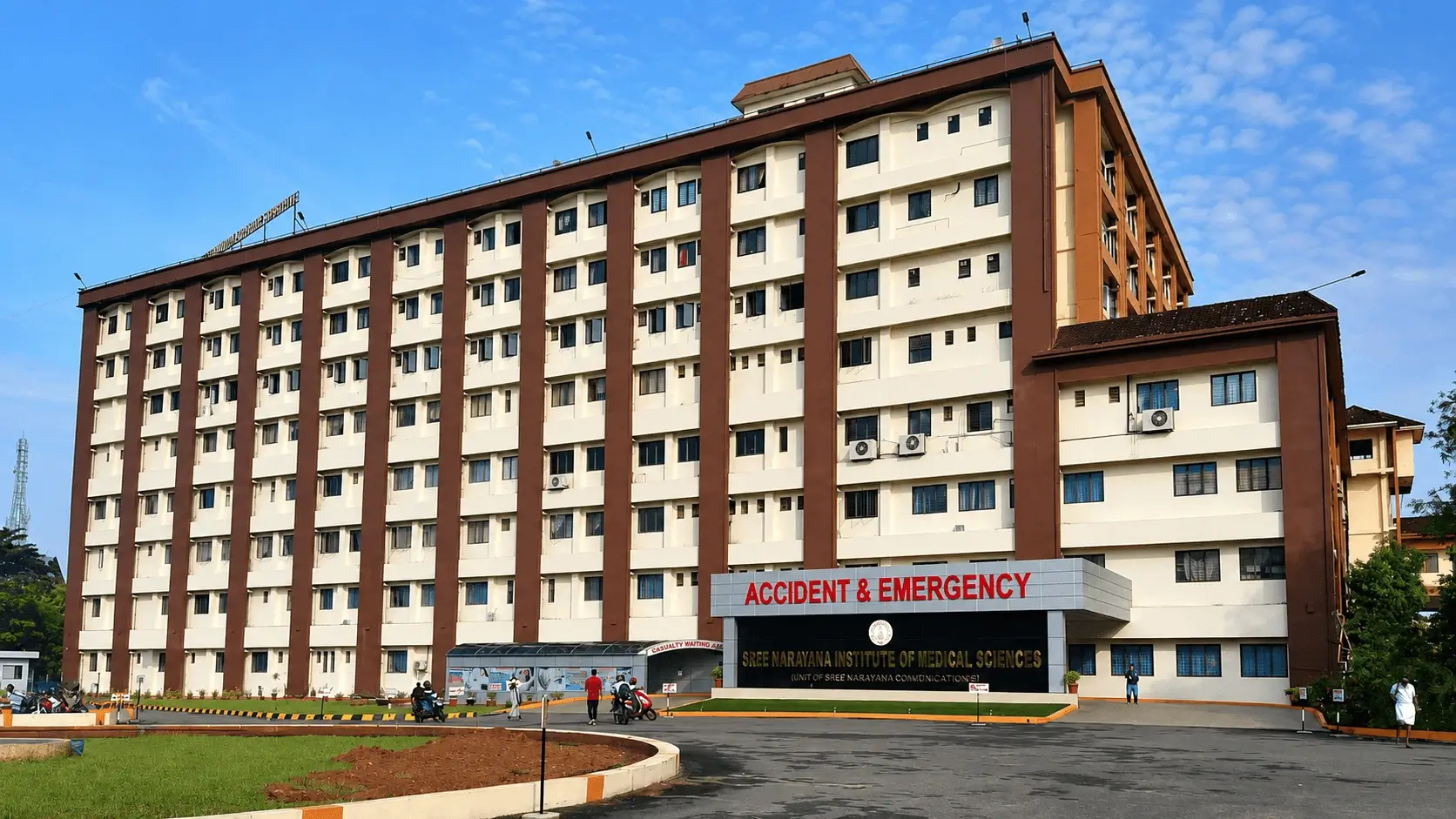
We built the SNIMS website in Ernakulam and have built or supported sites for Elite Mission Hospital and Baby Memorial Hospital. Our team in Kozhikode has been doing this work since 2020.
The problems we usually see on hospital websites
Before we quote, we go through your current site on a phone, the way a patient would. The same problems come up again and again.
Booking means calling a number, or filling in a contact form that emails the hospital. Those emails often land in spam or go unanswered, and the patient has no idea whether anyone received the request.
On the hospital sites we manage, over 85% of visitors use a phone. Yet many sites are still designed for a desktop screen, so on a phone the text is tiny, menus are hard to tap and finding a doctor or a phone number takes far too long.
Department pages are often a single paragraph, so they rarely appear in Google or AI search results for that speciality. Doctor profiles are missing qualifications, experience, specialisations and consultation timings, which are the details patients use to decide who to see.
Old announcements, doctors who left months ago, wrong timings and services the hospital no longer offers. Each one makes a patient wonder what else on the site is wrong.
When every small change needs a call to the developer, updates get delayed and then forgotten. This is usually why the information goes out of date in the first place.
Many patients in Kerala and the Gulf would rather send a WhatsApp message than fill in a form. Without a WhatsApp button and tap-to-call numbers for each department, those patients simply call another hospital.
Pages take too long to load on mobile data. Without an SSL certificate, browsers mark the site “Not secure”, and some show a warning page before it even opens. Broken links and missing images make it worse.
Most hospitals can’t tell how many calls, bookings or WhatsApp enquiries came from their website last month, so they can’t judge whether it’s working or worth improving.
What hospital teams say about working with us
From the people who look after the website day to day at three hospitals we work with.
“Efficient and responsive web support provided by DigiBeat for Baby Memorial Hospital for the past many years. Always quick to resolve issues and maintain smooth digital operations.”
“Very satisfied with the work done by DigiBeat Online Solutions. The team redesigned our website to be faster, mobile-friendly, and more modern. They listened to our requirements, delivered on time, and were very responsive during the process. Highly recommended for reliable web development”
“As a representative of Elite Mission Hospital, I am pleased to share my appreciation for the professionalism, commitment, and quality of service demonstrated by the team. Their organised approach, effective coordination, responsiveness, and dedication to maintaining high standards are truly commendable.
What we build into a hospital website
These come with every hospital website we build. Open any of them for the detail.
Patients choose a department, doctor and preferred time from any doctor or department page. The request goes to your appointment team’s dashboard and WhatsApp at the same moment, and the patient gets an instant message saying it arrived.
Your team then confirms the slot by phone or WhatsApp. Requests don’t depend on one email inbox, so they can’t get lost in spam. If your HMS or booking software has an API, requests can go straight into it.
We design the mobile screens before the desktop ones. Doctor search, booking, call and directions are all reachable with a thumb from the first screen, and the text is readable without zooming.
We test every site on mid-range Android phones over mobile data, because that’s how most patients will see it.
Patients search by name, department, specialisation or OP day. Each profile shows the doctor’s photo, qualifications, registration number, experience, specialisations, languages spoken and consultation timings, with a booking button underneath.
Every speciality gets a full page covering conditions treated, procedures, facilities, doctors, timings and common questions.
We write in plain language, your doctors review it, and we add structured data so Google and AI search tools understand what each department offers.
When a doctor joins or leaves, a staff member updates one profile in a few minutes. The change then shows everywhere: the directory, the department page and the booking form.
Announcements carry an end date, so old notices come down on their own. We train your team and leave a short written guide. If you’d rather not do it yourself, our Care Plan covers updates.
Every page launches with its own meta title and description, descriptive alt text on every image, a clear heading structure and an XML sitemap. We connect the site to three free tools registered in your hospital’s name:
Each month we review all three, fix what’s holding patients back and send you a one-page report of what changed.
Patients now ask Google’s AI Overviews and assistants like ChatGPT which hospital to visit.
Clear department pages, accurate doctor profiles, FAQs and structured data help those tools find your hospital and describe it correctly.
It answers the questions your front desk hears all day (OP timings, which department to visit, directions, parking, visiting hours, insurance accepted), using only your hospital’s own information.
It replies in English, day or night, and passes anything it can’t answer to your team on WhatsApp.
How we work with hospitals
Six steps, planned so your doctors and front office spend as little time on the website as possible.
Website check and stakeholder call
We review your current site and talk to the people who use it: the front office, IT and marketing. Start with a free website check.
Sitemap and fixed quote
We list every department, doctor and section, then quote one fixed price.
Design approval
You approve the homepage, department and doctor page designs before we build.
Content collection
We give you simple templates for doctor and department details. Hospitals often find this is the slowest step, so we start it early.
Build, test and redirect
We build, test on real phones and set up 301 redirects from your old pages so you keep your Google rankings.
Launch and training
We train your staff to update doctors and timings, then move you onto a care plan.
What it costs
Hospital websites start from ₹35,000/-. The final price depends on the number of departments and doctors, language versions and any software integration.
Typical timeline: 12 weeks for a hospital with up to 30 departments.
See the hospital website package for what's included, or ask for a fixed quote after your free check.
- Doctor directory with search & filter
- A search-ready page for every department
- Appointment requests built for phones
- Staff admin panel & training
Questions hospitals ask about their website
Timelines, connecting to your HMS, who updates the site, and keeping your Google rankings.
Usually 4 to 12 weeks, depending on size. The biggest variable is how quickly doctor and department content comes in. We send templates on day one so your team can start collecting it.
Often, yes, if your system offers an API or a booking link. If it doesn't, appointment requests go to your desk by email or WhatsApp and your team confirms them as they do today.
Your staff can do it in the admin panel in a few minutes. On our Care Plan, we do it for you.
Not if redirects are done properly. We map every old URL to a new one before launch and monitor Search Console afterwards.
Yes. See SEO for hospitals and Google Ads management.
Planning a new hospital website, or fixing the one you have?
Send us your current site and we'll show you what to fix first, free.